Tuesday, August 6, 2013

TERROR BLOOMS IN THE GHETTOS OF PALESTINE


“Our freedom is incomplete without the freedom of the Palestinians.”
Nelson Mandela

I hear skeletons calling out
from the other side of a darkened room.
I will not sleep tonight.
There is another kind of war,
the war inside a man, where all wars begin.

Terror blooms in the ghettos of Palestine.
Children sleep with dust in their beds.
Their cries like the seeds of fish
are taken up into the clouds.
Rockets flare out of the Gaza strip.

The law has hooks for hands, it is not delicate,
it does not have a surgeon's touch.
It cuts and rips into the bone.
The dead fly over Israeli checkpoints,
out of the occupied territories.

The candles have been snuffed out
but the sorrow remains.
Children sleep with dust in their beds.
Their cries like the seeds of fish
are taken up into the clouds.


Sunday, August 4, 2013

FROM BLACK TO BLUE

Listen here: FROM BLACK TO BLUE 

In my mind, I hear your voice
telling me that you had no choice.
That there was nothing left to do.
That your world had gone from black to blue.

Do you have nothing left to hide,
there on the other side?
No more secrets, no more lies,
no more need for alibis?

Was there nothing I could say
to make you want to stay?
Did you really have to go?
That's what I want to know.


*Note: While the poem above was written shortly after learning of the death of my childhood friend in 2004, the one below was written sometime later. My old friend struggled with both addiction and a mood disorder. I played rhythm guitar for him in eighth and ninth grade and in exchange he taught me how to play lead guitar and bass; he played with breathtaking virtuosity. He went on to become one of the finest jazz bass players in the Twin Cities.  Sadly I lost touch with him after I left Minnesota in the mid seventies and was never able to carry "the message" of recovery to him; that regret echoes in the lines above. What a loss...


SHE ONCE BELIEVED IN HAPPY ENDINGS

Once a stone has been dropped
into the depths of a green and living pond,
it cannot be recalled, the action cannot be undone;
it has become a part of that green continuum.
Reality has been changed,
altered, rearranged.

I met him in the eighth grade.
He took LSD on the weekends and was already
a guitar virtuoso. 
He loved the early Yardbirds, jazz and blues. 
He taught me how to jam.
He once fired me from a junior high band

but he was always kind. 
Years later a storm blew in.
Voices roared in his head.
He wanted to banish them to the darkness.
But how could he win
against such a big wind? 

Where could he begin?
Wishes changed nothing.
So he taped his ID 
to his wrist and put a gun
to his head
and squeezed the trigger until he was dead.

Each night his mother longs to dream of her only son,
before the voices and the gun.
She once believed in happy endings 
but no more,
not without her son, 
not in a world undone.


Saturday, July 20, 2013

THEY ARE LIKE VISITORS FROM ANOTHER COUNTRY

Somehow they are different
from us now.
It is as if they traveled
back from the dark side
of the moon and left a part
of themselves behind.
They seem baffled
by the things we say.
They are like visitors
from another country.

They smile and laugh,
but it is not the same smile
and laugh
as they had before.
They are our neighbors,
but when we knock
on their doors,
they are never at home.
The friends we once knew
have moved away.


Tuesday, June 18, 2013

THE SOUND OF WAR


Lightning flashes in the clouds.
I hear the boom and echo 
of detonations in the distance.
I hear the sound of war.
Bashar al-Assad uses white phosphorus
on women and children.
It blisters and burns.  
Fire devours their lungs.
Their footprints are soon 
effaced in the dust.

I hear the roar of the mob, democracy in the raw.
Intelligence is flattened, nuance is lost.
A diplomat in denial doesn't point with a finger,
he points with a gun. 
Russia votes down a no-fly zone. 
The killing goes on.
Lightning flashes in the clouds.
I hear the boom and echo 
of detonations in the distance.
I hear the sound of war. 


Tuesday, June 11, 2013

I SAW SOCRATES ON THE ROAD TODAY


I saw Socrates on the road today.
His beard was long and gray.
He had stardust in his hair.
His eyes glittered and flashed.
I saw Socrates on the road today.
His beard was long and gray.
His eyes glittered and flashed
I saw Socrates on the road today
I saw pilgrims on their way to Bethlehem.
I saw poets and singers, too.
I saw moms and their kids.
I saw men without masks.
I saw Socrates on the road today.
His hair was long and gray.
I saw Socrates on the road today.
His eyes glittered and flashed.
He had stardust in his hair.
His beard was long and gray
I saw pilgrims on their way to Bethlehem.
I saw poets and singers, too.
I saw moms and their kids.
I saw men without masks.
I saw Socrates on the road today.
He had stardust in his hair.
His beard was long and gray.
His eyes glittered and flashed


Wednesday, June 5, 2013

The Worst Lies

“You have to believe in your stuff—every day has to be the new day on which the new poem may be it.” —John Berryman

The worst lies, they say, are the ones 
we tell ourselves
when no one else is listening.
A man can lose his way on a dark road,
his headlights can grow dim,
his car crossing a white line
that he no longer sees.

A poem he once believed in falls apart.
A heart stops beating.
Then comes sleep, 
followed by an awakening,
and a new kind of feeling forms, 
unfolding,
even before he can name it.


Sunday, May 19, 2013

January In Minnesota


for John Berryman

Snow enshrouds the Mississippi.
January in Minnesota,
the world is silent and white.
He dreams of Florida.
He dreams deep into the night.
The ocean beckons like a mistress,
he longs for a kiss.
He once had a plan
but he failed as a pilot
and fell as a man.


Tuesday, May 14, 2013

WHO SHOT JFK?


Buy the Book

A cloud of blood splatter coming from the front of Kennedy's head (see frame 313, in the Zapruder film) clearly indicates the shot came from the rear. So rather than searching for shadows why not begin with what is fact and from there ask questions? Who helped Oswald get the job at the School Book Depository?? Ruth Paine, a woman who spoke Russian & inserted herself in Marina Oswald's life. Why? Who suggested Oswald look for work in Dallas? Who helped Oswald get a job at a photo lab in Dallas? Who gave Oswald the money to buy the rifle? The answer: George de Mohrenschildt. He came from Russia (decades before the assassination) and was involved in oil in Guatemala (where the CIA trained for the Bay of Pigs land invasion led by Rip Robertson, a Dallas native, and known CIA assassin). Rip Robertson’s brother in law often accompanied him to Guatemala where he, like de Mohrenschildt, was involved in oil speculation in Guatemala. When asked about the fatal head shot to JFK, Robertson was quoted by family members as saying “good shot”. Officially, Rip Robertson died of Malaria in 1973 but those close to him say he was assassinated via pinprick with an Asian poison.

It is claimed that George de Mohrenschildt worked with the Nazis and was rejected by the OSS because of those ties. Others say he was a double agent working with the Soviets. Jackie knew him and called him Uncle George (Jackie's step father, Hugh Achincloss, told de Mohrenshildt after the assassination that Jackie never wanted to see him again because of his association with Oswald). George de Mohrenschildt's testimony was extensive in front of the Warren Commission. In 1977, shortly after being contacted by an investigator for the House Select Committee on Assassinations, George de Mohrenschildt died by a shotgun blast to the head. It was ruled a suicide. It should be noted that de Mohrenshcildt was conveniently out of the country (in Haiti) at the time of the assassination.

If Oswald was the shooter, there is still room for a massive conspiracy. CIA? Soviets? Oswald, a defector, had returned from the Soviet Union & Oswald was at the School Book Depository with a rifle! He had already attempted an assassination on General Walker, a right wing fanatic, with that same rifle. There is no question that Oswald brought the rifle to the School Book Depository. Why would Oswald set himself up? So why not begin with Oswald? If it was a conspiracy of elements of the CIA (manipulating and using Oswald as the trigger man), there would be a cover up. Who better to hide behind then someone with Oswald's history & Soviet wife? And what about Marina? Is it so far fetched to believe that the KGB would send Oswald back to America with a young, pretty operative? If it was a Soviet conspiracy & the American government knew, would they cover it up fearing nuclear Armageddon???  Or was Oswald just a little man, sick in the head, who wanted to play God?


He wasn't like the other boys;
he played with ICBMs instead of tinker toys.
But no one made too much of a fuss.
No, no one made too much of a fuss.
After all, he was one of us.

When he peddled an unwinnable war
amongst the Joint Chiefs and the Marine Corps,
no one made too much of a fuss.
No, no one made too much of a fuss.
After all, he was one of us.

When some were heard to say
that he took the head shot that killed JFK,
no one made too much of a fuss.
No, no one made too much of a fuss.
After all, he was one of us.


Monday, May 6, 2013

THE WOMAN IN DARK CLOTHES


(for Edith Stein)

She adored Husserl  the depths of his thought
But philosophy was not enough for her
She became a student of love
We breathe in the ashes of those burned
In the ovens of Auschwitz
Flowers bloom out of the dust
She walks with us in the darkness
She is familiar with it
She knows the way out

They were not aliens from another planet
They put their human faces on just like us
Before they dropped Zyklon B in a hole
In the roof and waited for the bodies to fall
That they shared in our common humanity
Somehow made monsters of us all
But why should we feel responsible
For their crimes,
When we barely recognize our own?

But the stain remains just the same
It will take all of human history to recover
From that loss.
We breathe in the ashes of those burned
In the ovens of Auschwitz
Flowers bloom out of the dust
She walks with us in the darkness
She is familiar with it
She knows the way out


As a child of the Jewish people who, by the grace of God, for the past eleven years has also been a child of the Catholic Church, I dare to speak to the Father of Christianity about that which oppresses millions of Germans. For weeks we have seen deeds perpetrated in Germany which mock any sense of justice and humanity, not to mention love of neighbor. For years the leaders of National Socialism have been preaching hatred of the Jews...But the responsibility must fall, after all, on those who brought them to this point and it also falls on those who keep silent in the face of such happenings.

Everything that happened and continues to happen on a daily basis originates with a government that calls itself 'Christian.' For weeks not only Jews but also thousands of faithful Catholics in Germany, and, I believe, all over the world, have been waiting and hoping for the Church of Christ to raise its voice to put a stop to this abuse of Christ's name.” —Edith Stein, Letter to Pope Pius XI (1933)


Letter to her Prioress at Carmel Echt
JM
Drente-Westerbork, Barracks 36, August 6, 1942
Dear Mother,
A Mother Superior from one of the convents arrived last evening with suitcases for her child and now offers to take some short letters along. Early tomorrow a transport leaves (Silesia or Czechoslovakia??).
What is most necessary: woolen stockings, two blankets. For Rosa all the warm underwear and whatever was in the laundry; for us both towels and wash cloths. Rosa also has no toothbrush, no Cross and no rosary. I would like the next volume of the breviary (so far I have been able to pray gloriously). Our identity cards, registration cards (as Jews), and ration cards.
A thousand thanks, greetings to all, Y.R.’s grateful child,
B.
(P.S.) 1 habit and aprons, 1 small veil.
The letter of August 6, 1942, was the final letter. On Friday, August 7, at the railway station in Schifferstadt, Germany, a woman in dark clothing inside a sealed transport hailed the stationmaster who was standing on the platform. She identified herself as Edith Stein and asked him to pass her greetings and a message to friends who lived there. The message was, “We are travelling east.”
The transport carrying Edith and Rosa Stein arrived at Auschwitz on Sunday, August 9. All the women and children as well as most of the men were immediately gassed. They were buried in a mass grave.
It was Edith Stein’s complete calm and self-possession that marked her out from the rest of the prisoners. There was a spirit of indescribable misery in the camp; the new prisoners, especially, suffered from extreme anxiety. Edith Stein went among the women like an angel, comforting, helping, and consoling them. Many of the mothers were on the brink of insanity and had sat moaning for days, without giving any thought to their children. Edith Stein immediately set about taking care of these little ones. She washed them, combed their hair, and tried to make sure they were fed and cared for.”


Wednesday, May 1, 2013

LONG AFTER DARK


A train carrying
contraband cargo
passes by farms
and hills
on its way to a depot
hidden
far underground

while men in masks
and biohazard suits
prepare for a disaster
and plot a course
for the stars

but oh the wind blows
hard here
and will not dissipate
until long after dark.


Tuesday, April 30, 2013

The Blue Poet & Other Stories of Addiction & Recovery


click on the link below to buy the book

While I am not a prolific writer of fiction (I consider myself primarily a poet), a few months back, I decided to compile a few stories that I had written over the years in one book, The Blue Poet & Other Stories of Addiction & Recovery (70,000 words). I chose three works: THE BLUE POET, a screenplay, PETER PAN, UFOS & THE MARLBORO MAN, a short story, and FALLING AWAY, a novella. While all three works are different stylistically, they all share a common theme: addiction/alcoholism and ultimately recovery. Not surprisingly, this theme is one that has marked my own life. I began my own journey of recovery in TerrellTexas in July of 1983. By a miracle of grace, I have been clean and sober since that time. I share similar stories here (stories that depict both that miracle of grace and the journey through hell that inevitably preceded that moment of clarity, that turning point).

THE BLUE POET--Haunted by the ghosts of the past, a young musician turns to drugs. Set in the mid seventies (except for flashbacks from the Kennedy era), and in the spirit of REBEL WITHOUT A CAUSE and ORDINARY PEOPLETHE BLUE POET looks into the heart of a young man haunted by both the Kennedy assassination and the death of his own father in a drunken car crash. JESSE SANDSTROM, 17, sings and plays bass for one of the most promising rock bands in the Twin Cities. But Jesse wants to leave the band behind and study art in Paris. Jesse's mother, MARY SANDSTROM, 37, tells Jesse they do not have the money to send Jesse to Paris. However Jesse's musician grandfather, GUS CHRISTIANS, 60s, encourages Jesse to apply. But just as Jesse sends in his application, his sister, ANNIE SANDSTROM, 14, is diagnosed with Non Hodgkin's Lymphoma. As Annie's illness progresses, so does Jesse's addiction to heroin. In the hospital near death Annie gives Jesse a rosary and asks him to pray with her. Jesse says nothing but cannot bring himself to pray. After Annie's funeral Jesse turns, once again, to drugs and overdoses on Annie's leftover morphine. He has visions of his dead father. As he lays unconscious on the floor, Jesse in a dream state converses with THE BLUE POET, a name he gave Robert Frost when as a boy he watched the Kennedy inaugural in a darkened basement and the flickering images on the TV screen turned the room blue…

FALLING AWAY--Strung out and desperate for drugs, Robert Rouan stabs a drug dealer in a scuffle in the North of Paris. He is then locked up in the Santé: a prison located in ParisFrance. After rumors spread that Rouan is a spy, he is brutally beaten and falls into a deep coma. He dreams of a white horse and a bridal bouquet and the promise of a future life. Twenty years later, Rouan awakens to an altered and damaged world, marred by wars and the collapse of the U.S. Government. What is left of America is now under quarantine: where life is controlled by monolithic corporations. The United Nations is now headquartered in GenevaSwitzerland. Some advocate opening up trade and restrictions on travel for those living in the Q (the Quarantined area stretching across all of North America). Rouan can longer walk, his legs have grown too frail from disuse. His former lawyer, Jean-Marc Frenot, visits frequently. Frenot invites Rouan to the United Nations. Geneva glows with activity and prosperity, there is no sign of the horrors of war and plague that Rouan had heard about. Frenot introduces Rouan to Christophe Tousant (assistant secretary general of the U.N.). Tousant, a Zen Buddhist in his eighties, a hunchback since birth, wears an Indian sari and sandals and in his own way reminds one of Mahatma Gandhi. Tousant advocates opening up trade and restrictions on travel for those living in the Q. Many oppose Tousant, fearing another plague in the free world. 

PETER PAN, UFOS & THE MARLBORO MAN—“The heroin was too much, much too much, Peter Wagner says somewhat despondently to himself. It was like floating into the beautiful, but disabling clouds of a coma—a fabulous flight but a debilitating descent. He thinks, if it wasn't for that they could have stayed together, but now he is being evicted—well, not evicted exactly, but forced to vacate because of non-payment of rent (same difference); while his girlfriend, Wendy, is incarcerated at the Hilltop unit, a branch of the Texas Department of Corrections… It is very dark and Wagner can hear the waves crashing by the shore. Lightning flashes and then shudders, echoing in the dark blue. And then, he remembers what it was his doctor had said in rehab. It wasn't about winning. No, he says to himself, it wasn't about winning at all.”

Friday, April 26, 2013

CONFESSION OF A TV ADDICT


After we saw Lee Harvey Oswald shot on TV,
there was no turning back.
Our old world had faded. Our old world had gone black.
Blue and pink lights flash across the screen.
Reporters pontificate at the scene.
The TV drones on,
we watch as if in a hypnotic trance.
(We do the zombie shuffle and dance.)

Our memories have been digitized, our brains blown away.
What story are we buying today?
The Boston bomber is on the loose.
Another five thousand dead in Syria. There will be no truce.
There are no umpires dressed in black.
There is no turning back.
Blue and pink lights flash across the screen.
Reporters pontificate at the scene.


Tuesday, April 2, 2013

THE TV


They left the TV on for years. No one ever
seemed to watch it.
Often, I could see it through the open drapes
illuminating the room at night.
Eventually the TV caught fire.
Flames shot out from the walls
and the roof.
Someone called the police.

Neighbors gathered in the street.
They opened their mouths in wonder
but no one spokeThey watched it all
like some kind of ancient sacrifice
as they witnessed clouds of smoke
floating up into the heavens,
sending signals to those
no longer left on the ground.


Saturday, March 23, 2013

A LONESOME DWARF IN A HOUSE OF WHORES


He lived in a mythic kingdom.
His house stood in the shadow of a mythic mountain.
He was a small man but one of great vision.
In his dreams, he saw drones in the sky
and robots on horseback.
He saw men fighting wars by remote control.

He saw a hooded figure holding a sword.
He took this as a sign;
he took this as a warning.
He imagined the end of the world
as he lay beneath the shade of a blue tree. 
He imagined it all broadcast on TV.


Wednesday, March 13, 2013

FOR EIGHT BELLES (EUTHANIZED AT CHURCHILL DOWNS)


There are no dark stalls now to hold her.
There is just the open range and the endless blue.

No one taught her how to run
but oh how she flew,

her eyes ablaze even after the race was done,
before gravity finally took her on and gravity won.


Wednesday, February 27, 2013

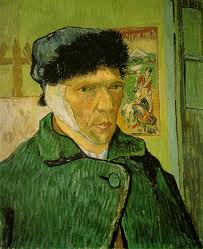
FOR VINCENT VAN GOGH & EDGAR ALLAN POE


Always the blade hovered over his head,
ominous and foreboding,
a shadow that changed the shape of things.
He saw apparitions in the corners of his mind.
In his sleep, he saw the faces of the dead.
There is money in nightmares and pornography 
but not in poetry.

The oldest woman in the world said
she once met Vincent van Gogh
and that he was disagreeable and drunk.
But why talk of that?
His work will not be forgotten.
We walk in a room and there he is, looking back 
at us, more like a ghost than a man.


Monday, February 18, 2013

Carry Me Across the Water


“Gather up the horses and let’s ride.
Carry me across the river to the other side.
Carry me across the river to my bride.

“I remember the day when the world turned gray.
Teach me how to fly before I die.
Carry me across the water to the other side.”

“Carry me across the river to the other side.
Carry me across the river and let me be your bride.
I remember the day when the world turned gray.”

“Gather up the horses and let’s ride.
Carry me across the river to the other side.
Carry me across the river to my bride.”


*music: Bsus2 Dmaj7 Bm7 Dmaj7 F#m A

*lyric: 

Gather up the horses and let’s ride.
Carry me across the river to the other side.
Carry me across the river to my bride.
Gather up the horses and let’s ride.
I remember the day when the world turned gray.

Teach me how to fly before I die.
Carry me across the river to the other side.
Carry me across the river to my bride.
Gather up the horses and let’s ride.
Carry me across the river to the other side.
Carry me across the river to my bride.
Teach me how to fly before I die.
Carry me across the river to the other side.

Gather up the horses and let’s ride.
Carry me across the river to the other side.
Carry me across the river to my bride.
I remember the day when the world turned gray.
Carry me across the water to the other side.
Carry me across the water to my bride.
Carry me across the water.


*Refrain of Eurydice

Carry me across the river to the other side.
Carry me across the river and let me be your bride.
I remember the day when the world turned gray.
Carry me across the water to the other side.
Carry me across the water and let me be your bride.
Carry me across the water.